
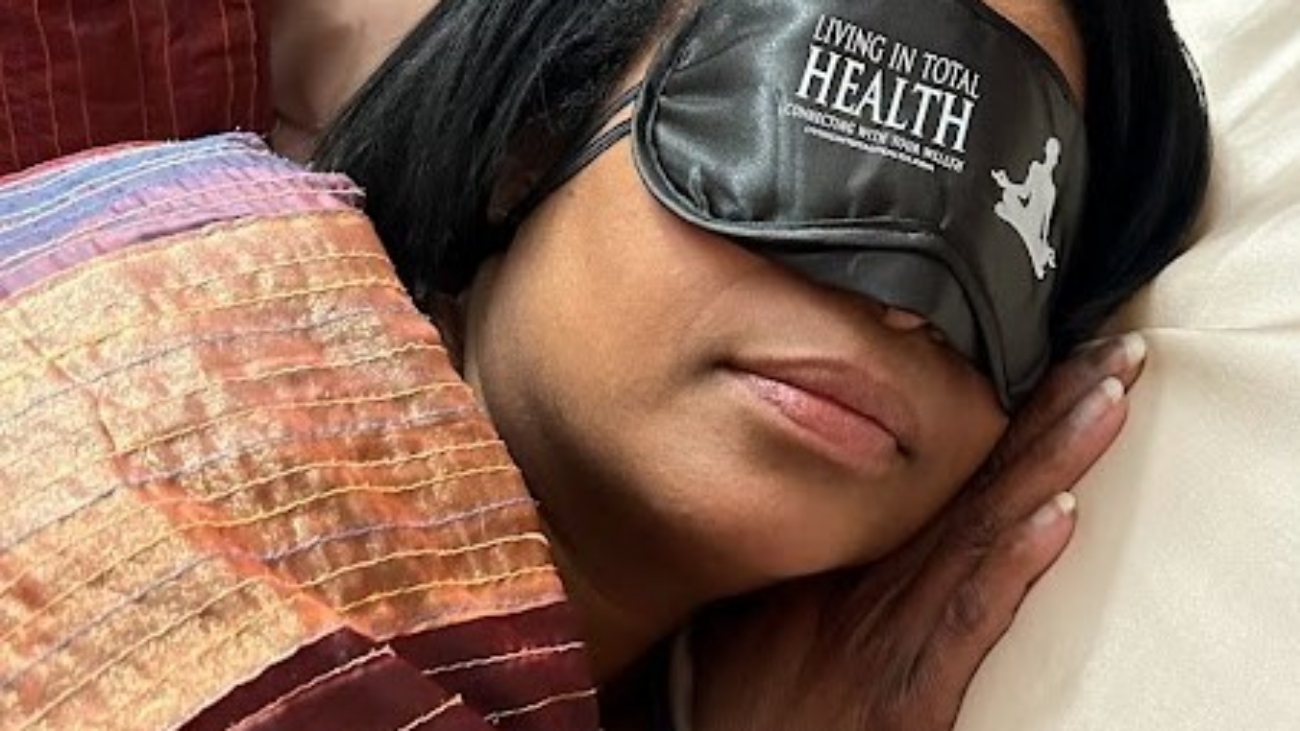
Glen Alex asleep in the Living In Total Health Sleep Mask

Why Sleep is Essential for Mental, Physical, and Overall Health

Sleep affects every area of health. So if you seek good physical, mental, emotional, and even spiritual health, then getting good nights’ rest is non-negotiable. For the record, the spiritual aspect of humanity is not about religion for me. It is about the alignment between choices and values/principals. Deep, restorative sleep ignites the body’s innate healing processes, promotes mental clarity and emotional balance, provides natural energy, and enhances joy. Plus, there are many other benefits of sleep.


“Sleep is the Swiss army knife of health. When sleep is deficient, there is sickness and disease. And when sleep is abundant, there is vitality and health.”
–Matthew Walker


How Poor Sleep Affects Health

Poor sleep, on the other hand, has significant negative health consequences. To inspire you to make choices that allow you to sleep well and enhance your overall health and well-being, it’s helpful to understand the downside of sleep deficits. Below is a brief list of those negative effects.

  • Sleep deprivation often resembles symptoms of Attention Deficit Hyperactivity Disorder (ADHD)
  • Poor sleep increases inflammation levels in women
  • The brain is unable to detox, as it normally removes neurological waste during sleep
  • Increased risk for high blood pressure, diabetes, and weakened immune system
  • Increased anxiety, nervous energy, mood swings• Mental fog and forgetfulness
  • Poor decision-making
  • Excess consumption of caffeine, sugar, food in general
  • Low energy/fatigue
  • Weight gain and impediment to weight loss

Interestingly, the negative side effects of sleep deficits are rarely mentioned in conversations about weight, memory, and hyperactivity. And as you can see, the negative effects of poor sleep are plenty and do impact every area of health–physical, mental, emotional, and ultimately spiritual health.


Adequate rest provides a sense of strength, awareness, and focus. Proper rest is also
beneficial in maintaining and improving health because it provides the wise body
space to heal and the opportunity to add quality to life.

–Glen Alex, Living In Total Health


Choosing Sleep

Lifestyle and habits definitely impact sleep quality. Do you burn the candle at both ends? Are you of the mindset that you will ‘sleep when you’re dead’? Do you sacrifice sleep to do something only to please someone else or to get some non-urgent task done? If you answered yes to either question, then your choices diminish the quality of your sleep and ultimately your health.

Sleep Hygiene, on the other hand, promotes deep and restorative sleep. The pattern of behaviors you engage in 2-3 hours before bedtime is Sleep Hygiene. These actions communicate to your mind and body when it’s time to rest. Thus, you choose actions that enhance the quality of your sleep for better functioning, mental clarity, and enrichment your overall health and well-being.

REST UP Method

Use my REST UP method for non-medicinal ways to improve the quality of your sleep patterns. These tips are designed to prepare your mind and body for rest, and can be adjusted to reflect your individual needs.

Routine: Develop habits for bedtime to invite sleep

    • eat at least 2-3 hours before to give your body time to digest food
    • minimize or eliminate consumption of caffeine and sugar
    • take a warm bath/shower, do gentle yoga, meditate, listen to soft music

Exercise: Engage in regular physical activity like working out, hiking, cycling or sports to burn off excess energy,                   which can lower blood pressure, enabling the body to relax.
Schedule: Have a regular sleep-wake schedule to support your Circadian rhythm and prioritize your to-do’s                         before winddown—don’t wait til after dinner to clean the bathroom for example
Tech Off: Eliminate using devices and doom scrolling; enable Do Not Disturb on your phone
Unwind: Journal after Tech Off; write down whatever is on your mind at that time (Mind Dump)
Practices: Engage in regular practices to quiet your mind and manage stress; meditation, journaling, and                             reading inspirational materials are powerful tools to bring about good sleep and rest


Other Sleep Influencers

The factors below also influence how well you sleep.

Temperature: the body needs to cool down 1-2 degrees, so your room temperature must allow for that.

Bedding: if your sheets, pillows, mattress, or blankets are uncomfortable, then your sleep suffers.

Stress: life events can weigh on your mind and create muscle tension, which will diminish sleep. Sleep                     hygiene helps keep stress to a minimum, particularly the mind dump and relaxation practices.


Figure out what you need to reach the restorative level of sleep because everyone is different.
Consult a professional health care provider if need be. In any case, get some rest!

–Glen Alex, Living In Total Health


Conclusion

Sleep is non-negotiable for physical, mental, and overall health. Deep, restorative sleep triggers your body’s own innate healing abilities, produces emotional balance and mental clarity, natural energy, and joy to your life. So, make lifestyle choices that allow you to sleep well to be as healthy as possible in every area of your life.

If you need assistance in evaluating and improving your sleep, visit GlenAlex.com to order your signed copies of Living In Total Health and Living Boundaries, and  to request for complimentary consultation with me.

Living Boundaries is Glen’s much anticipated 2nd book. It is a deep dive into health boundaries and how boundaries impact physical, mental, emotional, and spiritual health. Living Boundaries is available in 18 countries on Amazon. Click here for each country’s link.

Glen Alex Author of Living In Total Health and Living Boundaries
Glen Alex, The Glen Alex Show, Health Blog, Self Advocacy, health and wellness

Why Self-Advocacy is Important for Your Health and Well-being

Do you speak up for yourself?

I am an advocate. I’m an advocate for my health and well-being, making conscious choices that sometimes buck against the “norm” and expectations of others. And I am an advocate for the health and wellness of others.

“I learned a long time ago the wisest thing I can do is be on my own side, be an advocate for myself and others like me.”
–Maya Angelou

Benefits of Advocating for Yourself

And I’m also a huge proponent of you advocating for yourself. Quite simply, self-advocacy is speaking up for yourself to get your needs met appropriately. Those needs can include nourishment, sleep, help in the home or with the kids, positive regard, respect, effective medical care, and self-care time. Your physical, mental, emotional, and spiritual health depend upon you getting your needs met with the cooperation of loved ones, coworkers, supervisors, politicians, and medical providers.

Advocating for yourself is required for your authentic experience of love and joy, and for your total health. It is also important for you to know that unmet needs lead to depression, anxiety, illness, addiction, and other unhealthy conditions.

One client presented with anxiety and panic attacks. She usually “goes with the flow” when her husband and family make plans and does not express her needs or desires. When things don’t turn out the way she wants, she gets angry which expresses itself as anxiety and panic.

Advocating for yourself is required for your
authentic experience of love and joy, and for your total health.

So, understand that if you are not comfortable speaking up for yourself and allow others to direct your life and experience, then your emotional boundaries are the issue. Reminder from Living In Total Health and previous blogs: emotional boundaries involve relinquishing your needs to please others, giving in to others against your better judgement, and taking unrealistic responsibility for the choices of others.

How to Advocate for Yourself

You can learn to self-advocate, however. Follow these simple steps to ADVOCATE for yourself:

A


cknowledge your needs and list them

D


etermine to whom and when to communicate your needs – spouse/partner, siblings, doctor

V


ocalize your needs with your words, communicating them to who you identified above

O


rganize your time, energy, and resources to allow space for you to get what you need

C


ontrol what you can, including your choices, reactions, and resources

A


sk for help and information when necessary

T


ake time for self-care, to self-soothe, to self-nurture

E


ducate yourself by doing your own research

You can follow these simple self-advocacy steps to enhance your health and well-being by getting your needs met appropriately, which will enable you to be whole and live fully — be wellthy.

For more information on advocacy, check out this episode of The Glen Alex Show, What You Need to Know About Hospital Errors and Advocacy on Youtube, iHeartRadio, Apple Podcasts, Amazon Music, and your favorite podcast platform.

Then visit GlenAlex.com to order your copy of Glen’s 3x award-winning book, Living In Total Health, and to request your complimentary consultation with Glen.

glen alex, living in total health, journal notebook, journal therapy, glenalex.com

Journaling to Enhance Your Mental Health and Well-being

I know firsthand the value and benefits of therapeutic writing. I experienced its powerful effects on mental and emotional health long before becoming a Clinical Social Worker and psychotherapist.

My childhood diary was my best and most loyal friend. It accepted all of my thoughts, feelings, and experiences without judgement. My diary provided an outlet for the mostly impoverished life I was born into. I say mostly because some of the non-monetary aspects of being poor positively impacted me then and richly influence my work now.

“Sometimes only the paper will listen to you.”
–Anonymous

Journaling to Heal

In my early twenties, I joined a dream group that lasted more than 7 years. During this time, I journaled hundreds of my dreams for interpretation by me and the group members. If you’re thinking that interpreting dreams is “out there” or crazy or weird or stupid, then you are wrong. Dream interpretation is a powerful psychological tool utilized by the founder of Psychoanalysis Sigmund Freud, PhD and Psychiatrist Carl Jung, PhD. The International Association for the Study of Dreams carries on this work. Anyway, journaling my dreams brought me new awareness, effective processing, and insights crucial to my health and healing.

Glen Alex, Clinical Social Worker, author of Living In Total Health, Indie Book Award Winner, Host of The Glen Alex Show, Positive Change Podcast Award Winner, Health, Healing, Journal Therapy, Mental Health, Well-being

I’ve also learned along the way that journaling has a positive impact on physical health as well. James Pennebaker, PhD is a Social Psychologist and author, and is known for his research on therapeutic writing, journaling. His studies have shown that in addition to healthy mindset shifts, journal therapy reduced the number of medical visits study participants had for up to six months after journaling.

“People who wrote about their deepest thoughts and feelings surrounding a trauma evidenced an impressive drop in illness visits after the study.”
–James Pennebaker, PhD, The Healing Power of Expressing Emotions

Journaling Tips for You

Because of these powerful benefits, I highly recommend journaling to my clients, particularly those with anxiety, depression, and difficulty sleeping. Those who do journal appreciate the new insights they learn about themselves, experience relief from their baggage, and sleep better.

To enhance your self-awareness and healing, here are few easy to implement tips for you:

1. Take a moment. Make sure you have privacy. Center by closing your eyes or focusing on a spot, and breathe deeply.

2. Start where you are. Journaling is not about being a best-selling author. It’s about expressing yourself. So write without judging your spelling, grammar, nor even what you say.

3. Dump your mind. Clients who do the mind dump report falling asleep faster and getting better quality sleep. It’s simple…your last act at bedtime is to write whatever is on your mind. It can be a recap of your day, ideas you have, your to-do list for the next day, etc.

4. Pick your topic. The more you journal, then the more personal your journal becomes. You will choose to write about specific themes or triggers in your life. Some even focus on what they’re grateful for. There are many sources for journaling prompts to get you started.

5. Express your uniqueness. Do you. Use whatever words and phrases you desire. And be as creative as you want to be. And if you prefer to speak your journal, then by all means record a verbal journal.

6. Reflect. Evaluating what your journal reveals to you is a critical step in your healing journey because it avails you of new, better, and healthier choices. ask yourself questions like What did I learn about myself? What surprised me the most? What was I reminded of? How can I use this information?

“Journaling is like whispering to one’s self and listening at the same time.”
— Mina Murray, 
Fictional Character

For more information on journal therapy, check out this episode of The Glen Alex Show, Discover the Healing Power of Journaling on Youtube.  Glen’s guest is Journal Therapist Kathleen Adams who offers a free online journal course, J is for Journal.

The most important aspect of journaling is to give yourself permission to just start and allow the pen or your voice to reveal insights to you. Then follow the steps above for health and healing.

herbs_ai-generated-8775370_1280_pixabay

How to be Your Own Shaman

Living In Total Health requires that you integrate your wholeness and your individuality into any health regimen. Inherent in this process is taking responsibility for your health—your choices and the consequent outcomes.

Your choices include, but are not limited to, what you eat and drink, your activity level, your mindset, your relationships, how you respond to challenges and difficulties, how you promote sleep, your utilization of health care, and how you personalize your own path to health.

“When you give your body the right tools, it knows how to be well.”
–Jane Barlow Christensen, Master Herbalist, Author of Be Your Own Shaman

Herbs and Natural Healing

Be aware that your choices also include credible alternative health care in addition to traditional medicine. One very credible alternative medicine practice is natural healing via herbal remedies. According to Johns Hopkins Medicine, humans have used herbs to treat diseases and maintain health for thousands of years. And MountSinai.org says that when “used correctly, herbs can help treat a variety of conditions, and in some cases, may have fewer side effects than some conventional medications.”

Please note that the Food and Drug Administration (FDA) does not regulate herbs and supplements. Therefore, products are not allowed to claim to treat specific conditions.

Recommendations for Using Herbs

As for herbs, I believe that nature’s remedies work when administered properly and that you can Be Your Own Shaman

Below are my recommendations for using herbs to enhance your total health.

1) Do your own research. Check out the product quality and the integrity of the company that produces the herb. Not all products are created equal and some companies don’t care much about the quality of their product. While it’s okay to attend to the opinion of ‘experts’, it’s even more impactful to learn the information for yourself. This is my recommendation for all areas of health because there is NO one-size-fits-all approach to any level of health.

2) Follow the product instructions or consult an herbal professional. While your individuality matters in total health, altering the instructions right off the bat without knowing how the herbs effect you may do more harm than good. So if you want to personalize any herbal remedy, then please consult a professional herbalist.

3) Listen to your body. The human body is wise and communicates regularly about what works for it and what does not work for it. Understanding what your body is communicating requires you to be present to your experience. So if you experience nausea, dizziness, rash, headache, upset stomach, sneezing, watery eyes, or other negative symptoms after consuming the herbs, then stop taking it and consult with a health care professional.

4) Make the appropriate lifestyle changes. Many chronic diseases like diabetes, IBS, chronic pain, and hypertension are impacted by diet, activity level, stress, and mindset. Herbs alone, just like medication alone, will not ‘fix’ some physical issues that most hope for because lifestyle issues are in play. Neither medication nor herbs will fix any condition that is created by and/or reinforced by lifestyle factors.


Herbal remedies can work for you to improve and maintain your health as a viable alternative to traditional medicine. Yet, your active participation is crucial to how herbs benefit you and your overall health. To that end, you control many variables in your own health. By doing your research, following product instructions, consulting an herbal professional, listening to your body, and making the lifestyle choices to promote health, you can Be Your Own Shaman.